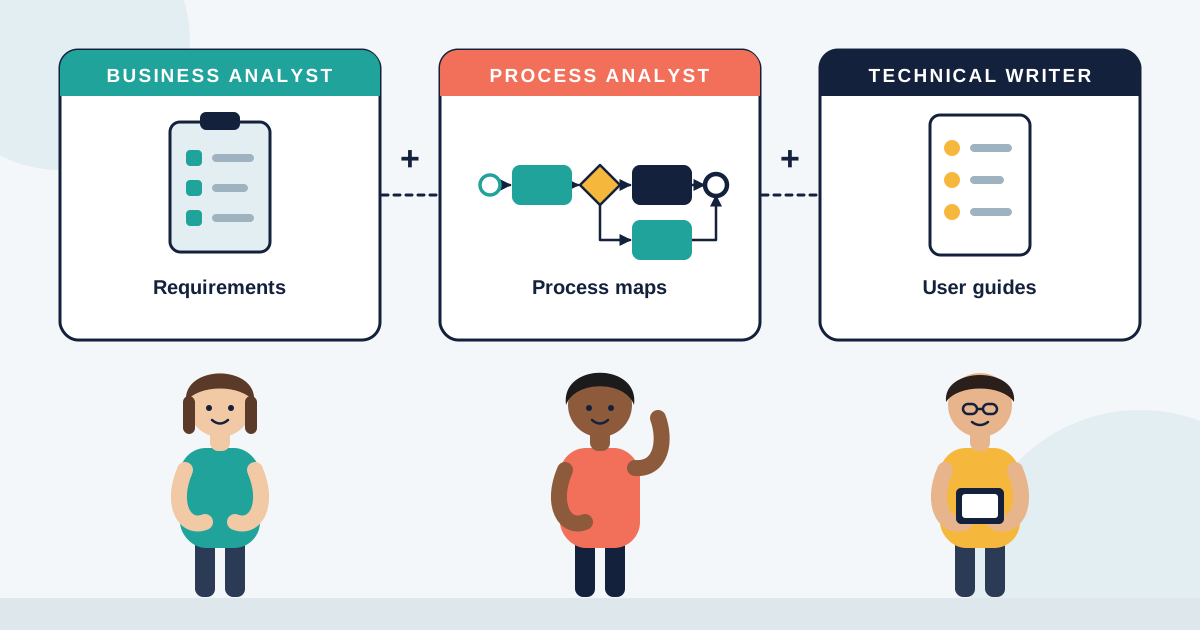


Who Writes Documents for Businesses? The Answer Might Surprise You
If you have ever typed “Who can write my documents?” or “Who can create templates for my business?”, you are not alone.
A lot of businesses know they need documentation, but they have no idea who actually does it.
And that is a problem.
Because when no one owns documentation, it does not get done properly—or worse, it gets dumped on someone with no experience.
Suddenly, someone in HR is writing policies.
Someone in IT is trying to document a process.
Someone in admin is figuring out SharePoint.
And none of them signed up for this.
So, who actually does this work?
What Does a Technical Writer Do?
A technical writer is the person businesses don’t realise they need.
Think of all the documentation that keeps a business running:
✅ Standard operating procedures
✅ Work instructions
✅ Process maps
✅ Policies and procedures
✅ Software guides
✅ User manuals
✅ Reports
✅ Templates
That is what a technical writer does.
They take messy, scattered information and turn it into clear, structured documents that people can actually use.
Why Most Businesses Get Documentation Wrong
Most businesses treat documentation as an afterthought.
They wait until something goes wrong before thinking, “We should have written this down.”
By then, people are:
❌ Guessing how to do things
❌ Following outdated instructions
❌ Wasting time fixing mistakes
❌ Scrambling to train new hires
A good technical writer stops this from happening before it becomes a problem.
Who Can Make Your Documents Look Good?
Writing documents is one thing.
Making them look professional and easy to use is another.
A technical writer also knows how to:
📝 Format documents in Word so they are structured and readable
📊 Create SharePoint sites so people can actually find the documents they need
📌 Design templates so every document follows a consistent style
If your documents look like a mess, people won’t read them.
If they can’t find them, they won’t use them.
A technical writer fixes both problems.
Who Documents Business Processes?
Process documentation is not just typing out a few steps.
It is about understanding how a business actually works.
A process mapping specialist looks at:
📌 What the business does now (the “as-is” process)
📌 What should change (gaps and inefficiencies)
📌 What the future process should be (the “to-be” process)
They do not just write it down—they make sure it actually makes sense.
Without process documentation, businesses end up with:
❌ Confusing workflows
❌ Tasks that take too long
❌ People doing things differently with no consistency
A technical writer who specialises in process mapping makes sure everyone is on the same page.
Who Can Write “How to Use Software” Guides?
Ever tried using a new system with no instructions?
Frustrating, right?
That is why businesses need user guides, help documentation, and step-by-step instructions for their software.
A technical writer can:
✅ Write simple, clear instructions
✅ Create screenshots and visuals so users understand faster
✅ Turn complex software into something anyone can use
Without proper documentation, people click random buttons, make mistakes, and waste time asking for help.
A good user guide prevents this before it happens.
Why You Shouldn’t Cut Corners on Documentation
Businesses spend thousands on software, training, and operations—but skip proper documentation because it seems like an extra cost.
Here is what happens when they go cheap on documentation:
🚨 Employees waste time figuring things out
🚨 Mistakes lead to costly errors
🚨 New hires take longer to get up to speed
🚨 Processes are inconsistent and inefficient
In the end, bad documentation costs more than good documentation.
Who Should You Hire to Write Your Documents?
If you need someone to:
✅ Write standard operating procedures
✅ Document your processes
✅ Create templates and structure your documents
✅ Set up SharePoint for better document management
✅ Write user guides and software instructions
You need a technical writer.
Not an admin assistant.
Not a random team member who has “some experience” in Word.
A professional.
Because documentation is not just paperwork—it is how businesses stay organised, efficient, and scalable.
And when it is done right, it saves you time, money, and frustration.
Final Thoughts: Stop Guessing, Start Documenting
If you have ever asked, “Who can write my documents?”, the answer is simple.
A technical writer.
If your business runs on unwritten knowledge, outdated guides, or messy documents, it is only a matter of time before it costs you.
So, before you let documentation fall apart, fix it now.
Because nobody thinks about documentation—until they desperately need it.