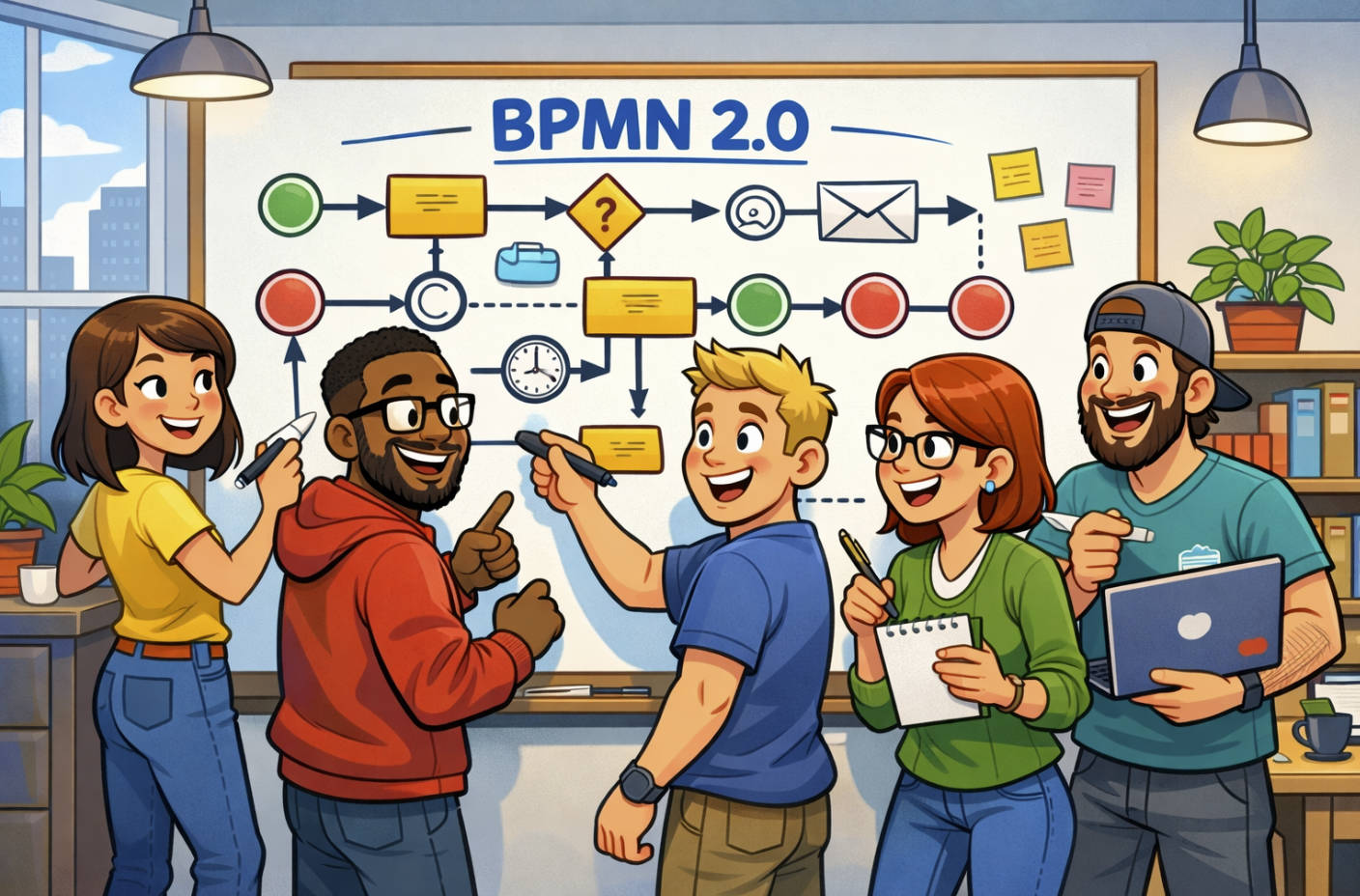

In business process analysis, technical expertise often gets the spotlight.
Frameworks, methodologies, and tools are seen as the backbone of success.
Yet in practice, stakeholders rarely remember which framework you used.
They remember how you made them feel while solving problems together.
The truth is, humility and people skills consistently outshine ego.
Being easy to work with, approachable, and empathetic makes analysts far more valuable than simply knowing every acronym or method.
Here is why removing ego and leading with people skills creates stronger results.
Why ego gets in the way 🚫
Ego often sneaks in when analysts feel the need to prove their expertise.
That can lead to overly complex explanations, dismissing stakeholder input, or pushing frameworks without context.
While the intention may be to demonstrate credibility, the effect is the opposite.
Stakeholders feel unheard, conversations become strained, and collaboration suffers.
Business analysis is not about being the smartest person in the room.
It is about enabling clarity, collaboration, and shared understanding.
Ego builds walls, while humility opens doors.
Humility builds trust 🤝
When analysts approach projects with humility, they listen first and speak second.
Instead of rushing to solutions, they ask questions to understand context.
Stakeholders quickly sense the difference between someone who is trying to “win” the conversation and someone who genuinely wants to help.
Humility signals that the analyst values collaboration.
It creates space for diverse voices to be heard.
And importantly, it positions the analyst as a partner, not a gatekeeper.
Trust grows not from showcasing knowledge but from making others feel respected.
That trust becomes the foundation for smoother process improvements and greater buy-in.
The power of people skills 🌟
People skills often get dismissed as “soft skills,” but they are the hardest to master.
Clear communication, empathy, adaptability, and patience all determine how successful an analyst will be.
A technically brilliant analyst who cannot explain findings clearly will frustrate stakeholders.
On the other hand, an analyst with strong people skills can make even complex solutions easy to understand.
Good personality also makes a difference in day-to-day interactions.
Colleagues prefer working with someone approachable, calm under pressure, and open to feedback.
These qualities create a collaborative atmosphere where everyone contributes more freely.
Practical ways to practice humility and people skills
- Ask before answering
Start conversations by asking open-ended questions.
This shows curiosity and respect for the other person’s knowledge. - Simplify, don’t complicate
Translate technical findings into plain language.
If stakeholders leave the room confused, the analysis has failed. - Acknowledge contributions
Give credit to stakeholders when their insights lead to progress.
This small gesture builds goodwill and strengthens relationships. - Manage conflict calmly
When stakeholders disagree, do not push your view immediately.
Facilitate dialogue to find common ground instead. - Reflect and adapt
Ask for feedback on how you communicate and collaborate.
Humility means accepting that you can always improve.
Results speak louder than ego
In real projects, stakeholders remember how smoothly the process felt.
They remember whether meetings left them frustrated or energized.
And they remember whether the analyst was a partner or a barrier.
By removing ego and emphasizing humility, analysts unlock stronger collaboration.
By leading with people skills, they accelerate adoption of solutions.
And by focusing on trust, they transform messy conversations into aligned action.
The best analysts are not just experts in frameworks.
They are experts in people.