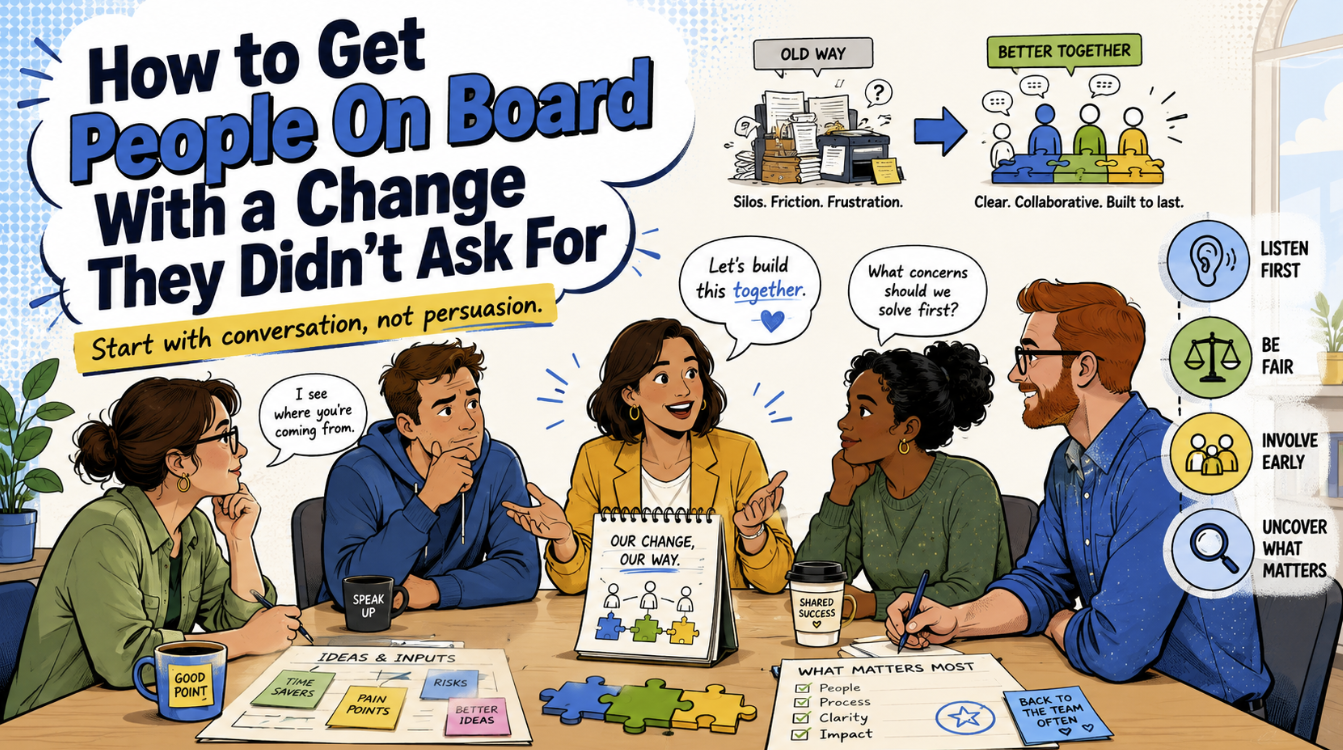

A knowledge base is one of the most valuable tools a business can have.
It saves time, reduces errors and keeps knowledge inside the organisation.
But building a good knowledge base isn’t just about choosing the right software.
It’s about working with people, drawing out their knowledge and turning it into something structured and useful.
Collaboration is what separates a library of documents from a living knowledge system.
🧩 Why Collaboration Matters
Most processes live in people’s heads.
They carry experience, tips and workarounds that never make it into formal documentation.
If you build a knowledge base without involving them, it will be incomplete.
Collaboration ensures the content reflects reality, not just theory.
It also builds trust so people use and update the knowledge base over time.
🎤 Getting Information Out of People’s Heads
Interviewing is one of the most effective tools for knowledge capture.
Instead of sending someone a template and asking them to fill it in, sit with them.
Ask open-ended questions like “what happens next?” or “what do you do if something goes wrong?”
Use pauses to let people think.
Often the most useful details come out when someone feels they can speak freely.
Mirroring back their answers helps confirm accuracy and makes them feel heard.
📂 Structuring Knowledge for Use
Once you’ve captured information, it needs to be structured clearly.
A good SOP page should include purpose, scope, roles, responsibilities and step-by-step instructions.
Work instructions should cover detailed tasks, sometimes with screenshots or diagrams.
Process documents should explain the bigger picture—how teams interact, what triggers a workflow and where decisions are made.
Templates help keep things consistent, but they only work if the raw knowledge is gathered through collaboration.
👥 Working with Different Stakeholders
Not all stakeholders are the same.
Some will share knowledge openly.
Others may hold back because they’re unsure how the information will be used.
This is where emotional intelligence comes in.
Acknowledging someone’s expertise makes them feel respected.
Explaining how their knowledge will help others builds goodwill.
Over time, this approach breaks down resistance and creates a culture of sharing.
⚙️ Tools That Support Collaboration
Collaboration needs to be backed by the right tools.
Platforms like Confluence, SharePoint or Notion allow real-time updates, version control and comments.
They make it easier to capture input from multiple stakeholders without endless email chains.
Permissions ensure content can be reviewed and approved by the right people.
But the tool is secondary to the process.
It’s the conversations and relationships that feed the system with useful content.
🌱 Sustaining the Knowledge Base
A knowledge base is never finished.
Processes change, people leave and new information emerges.
The best knowledge bases have clear ownership.
Each department should be responsible for keeping its documents current.
Encouraging staff to suggest updates or comment on content keeps it alive.
A healthy knowledge base reflects collaboration across the business, not just a single person’s effort.
🎯 Final Thought
A good knowledge base comes from people, not just software.
By listening, asking the right questions and involving stakeholders, you create documentation that is accurate, practical and trusted.
Collaboration turns scattered knowledge into a structured system that helps everyone.
Technology provides the platform, but it’s people skills that make it valuable.