
🌐 Where AI Adds Value
AI is changing how we work.
It can automate tasks, capture processes and provide analysis at speeds humans can’t match.
For business process analysts, AI tools can map workflows, highlight inefficiencies and even draft documentation.
But while AI gets you started, it doesn’t finish the job.
Data without context can lead to poor decisions.
That’s where human connection steps in.
🗣️ Why Collaboration Matters More
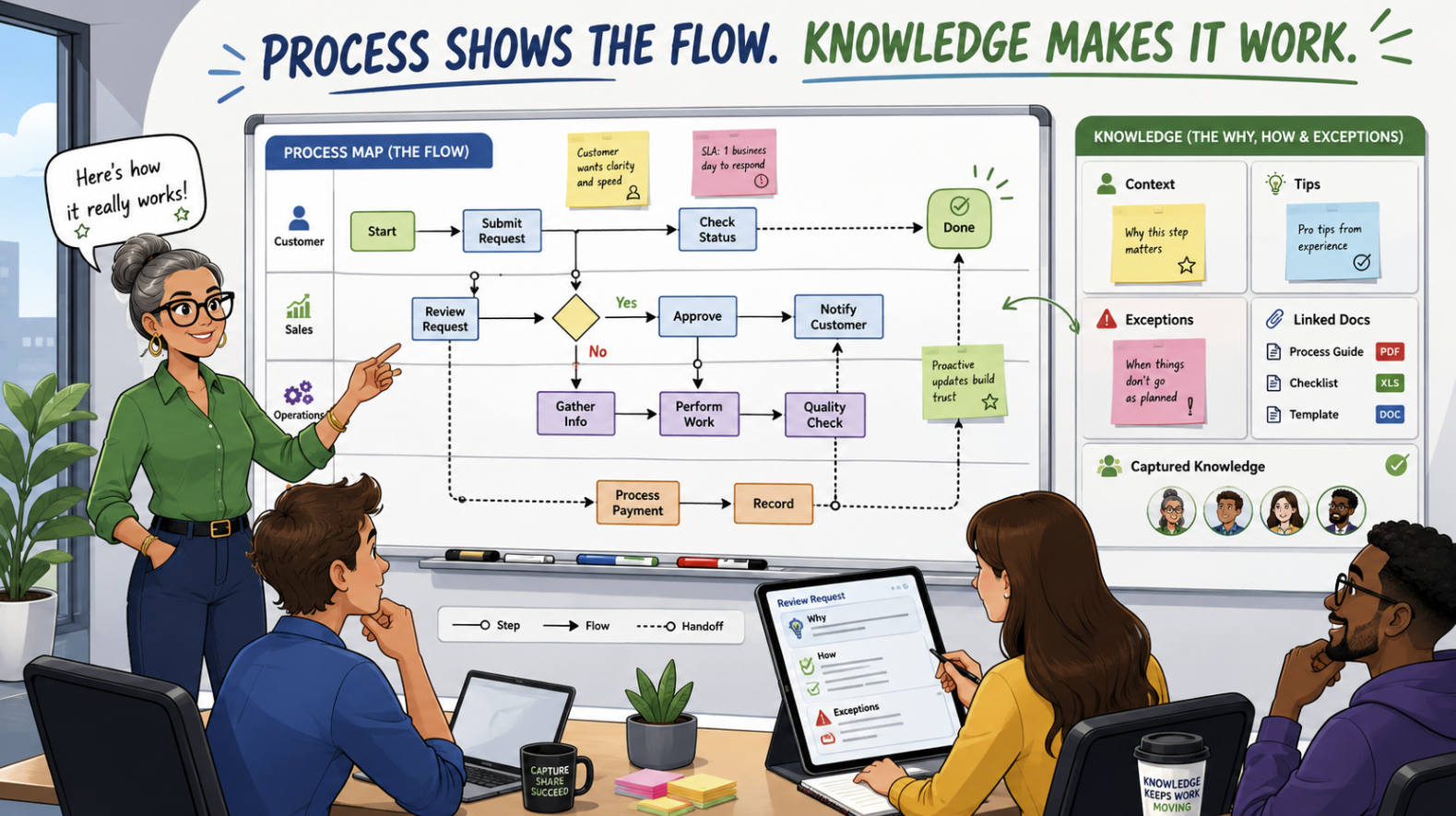
Processes aren’t just diagrams or system flows.
They’re lived experiences shaped by people.
When stakeholders share their frustrations or concerns, AI can’t always interpret the emotion or nuance behind them.
An analyst who listens carefully can uncover the “why” behind the data.
Collaboration turns information into insight.
AI supports the process, but human conversations build the trust needed to make change stick.
🧑🤝🧑 The Role of Emotional Intelligence
Emotional intelligence is often overlooked in process work.
Yet it’s the skill that makes the difference between a document people ignore and a solution they adopt.
When analysts show empathy and humility, stakeholders open up.
They share the details AI can’t capture, like unspoken fears or cultural barriers.
By combining AI insights with human connection, analysts create outcomes that are practical and supported.
📂 Bringing It Together in Practice
Think of AI as the assistant that gathers information quickly.
It can prepare draft process maps or capture logs of activity.
But workshops with people are where the real improvements take shape.
Stakeholders correct gaps, add context and explain what the data doesn’t show.
An analyst who facilitates those conversations ensures that processes reflect both technology and reality.
That combination makes solutions sustainable.
🌟 Final Thought
AI takes us far, but human connection completes the journey.
Collaboration, trust and empathy are what make process improvements stick.
The analysts who succeed are not the ones who rely on tools alone.
They’re the ones who combine AI with people skills to deliver real results.