
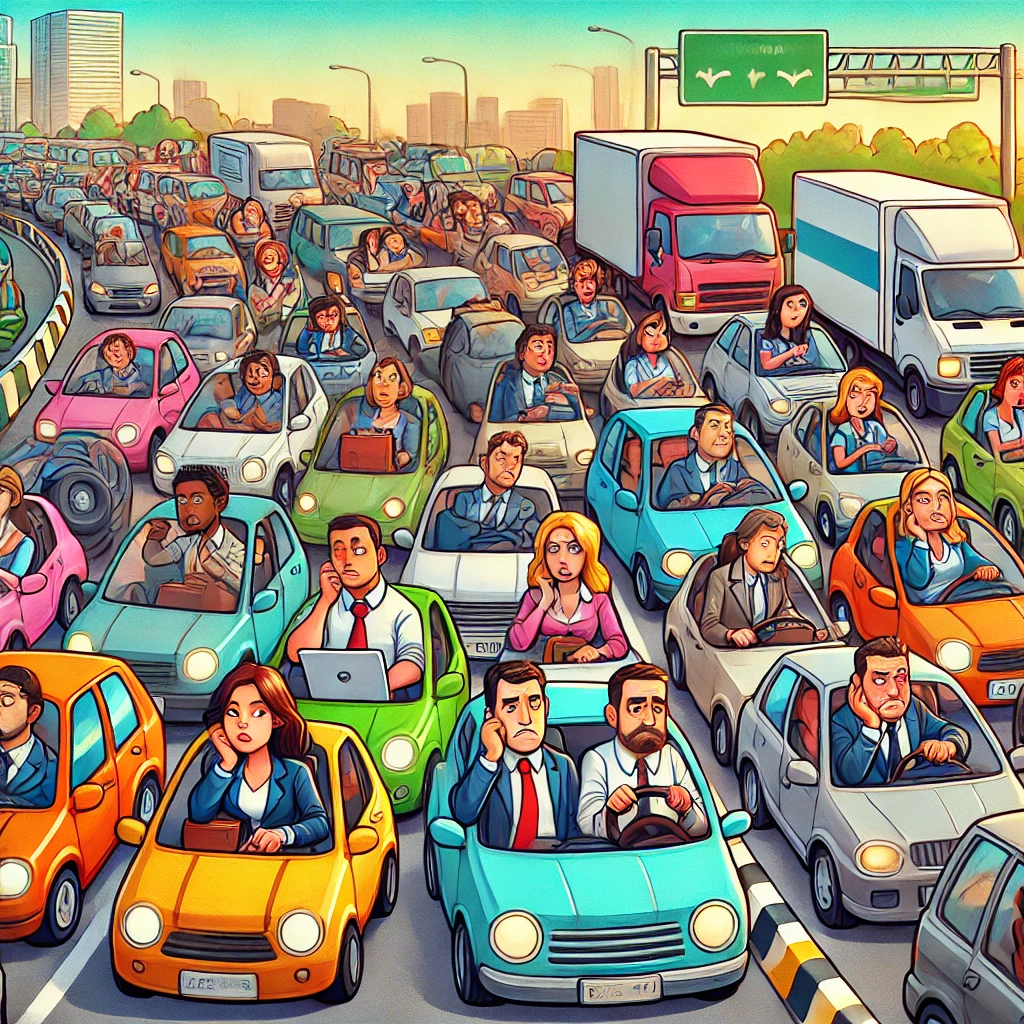
🚗 You will spend over a year of your life stuck in traffic.
📊 Studies show that the average commuter spends over 400 hours per year just getting to and from work.
⏳ That is 10 full workweeks wasted—time that could be spent working, exercising, or just sleeping in.
😩 Long commutes drain energy, lower productivity, and make people more stressed and tired.
🏠 Yet companies still insist on dragging employees into an office for work that could be done remotely.
📢 Learn why the traditional office model is broken, how commuting is making workers less effective, and why remote work is not just a perk—it is a necessity.
🚀 Stop wasting time. Read this before you sit in traffic again.
How Much of Your Life Are You Wasting on Commuting?
If you drive an hour to work and an hour back every day, that is 10 hours per week just sitting in traffic.
Over the course of a year, that adds up to 500 hours—more than 20 full days of your life gone just commuting.
Over a 30-year career, that is 15,000 hours spent commuting—or almost two full years of your life.
Now imagine what you could do with that time instead.
What Could You Be Doing Instead of Sitting in Traffic?
If you work from home, here is what you get back:
💤 More sleep – Studies show that well-rested employees perform 25% better than those who are sleep-deprived.
🏃 Better health – People who cut their commute out of their routine exercise 30% more each week.
💰 Saving money – The average commuter spends $5,000 a year on fuel, parking, and car maintenance.
📈 Higher productivity – Studies from Stanford show that remote workers are 13% more productive than office workers.
👨👩👧 More family time – Instead of sitting in traffic, you could be having breakfast with your family or enjoying an evening walk.
The Traditional Office Model Is Outdated
For decades, people assumed that being in an office = working hard.
But research shows that most employees are only productive for 2.5 hours per day in an office.
Between unnecessary meetings, distractions, and wasted commuting time, forcing employees into an office does not actually lead to better work.
Remote work lets people focus when they are most productive, leading to higher-quality work with fewer distractions.
Why Are Companies Still Dragging People into Offices?
If remote work is so effective, why do some businesses still insist on in-office work?
The truth is, many managers are stuck in the past.
They believe that if they cannot see employees working, they must not be working.
But studies prove otherwise:
📊 94% of employers say productivity stayed the same or improved when employees worked remotely.
🏢 Office workers spend up to 30% of their day distracted by unnecessary conversations and interruptions.
👩💻 Remote employees report higher job satisfaction, lower stress, and better work-life balance.
The data is clear: forcing employees to commute does not improve business outcomes—it only wastes time and money.
Remote Work Is Not Just a Perk—It’s the Future
Companies that embrace remote work attract better talent, reduce costs, and increase employee retention.
Workers who have flexible work options are 35% more likely to stay at their job long-term.
Companies that let employees work remotely save an average of $11,000 per worker per year in overhead costs.
And most importantly?
Employees who work from home are happier, healthier, and more productive.
The Bottom Line
Every minute spent commuting is a minute you never get back.
If you had the choice, would you rather:
❌ Sit in traffic for hours every week
✅ Spend that time on something that actually matters
Businesses that force employees into an office for no reason are not just wasting their employees’ time—they are wasting their own resources.
The future of work is not about where you sit—it is about what you produce.
If your company is still making you spend hours commuting when your job could be done remotely, it might be time to start asking why.
🚀 Stop wasting time. Work smarter. Work from home.