
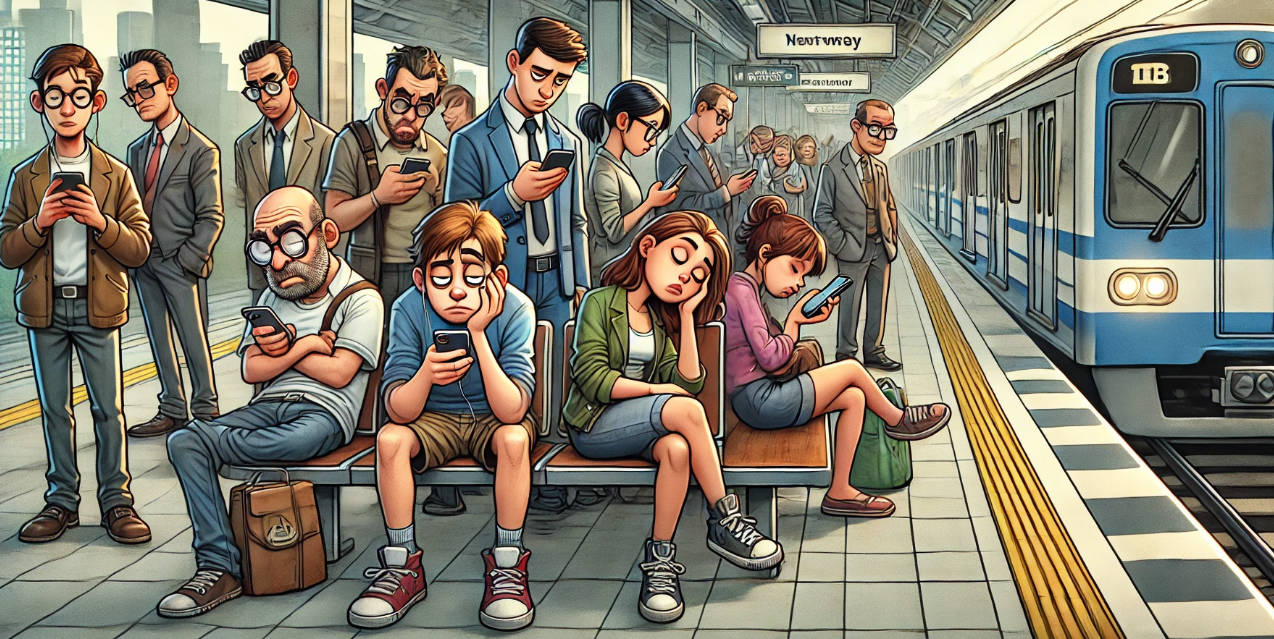
If you take the train to work every day, you might want to sit down for this. The average train commuter spends over 400 hours per year just getting to and from the office. That adds up to nearly 17 full days a year.
Over a 30-year career, that is more than a full year of your life spent just sitting on a train.
Think about that.
A whole year gone—time you could have spent sleeping, exercising, working productively, or actually living your life.
Remote work changes everything.
Here is why ditching the daily train ride is the best decision you can make for your work, health, and sanity.
The Hidden Cost of Commuting
People often only think about train fares, but commuting costs way more than money.
🚆 Time wasted—That 1-2 hours a day could be used for something that actually benefits you.
🚆 Mental stress—Long commutes increase anxiety and burnout, making work feel even harder.
🚆 Physical exhaustion—Waking up earlier, sitting still, and dealing with delays take a toll on your energy levels.
🚆 Lost productivity—You are spending valuable time commuting when you could already be working.
Commuting is not just an inconvenience—it is an efficiency killer.
Long Commutes Are Bad for Your Health
Research shows that long commutes are linked to higher stress, less sleep, and increased risk of depression.
A UK study found that people with longer commutes have lower life satisfaction, poorer mental health, and higher blood pressure.
Sitting on a crowded train, dealing with delays, and running for connections are not exactly great ways to start and end your day.
Now compare that to working from home.
No more waking up at dawn.
No more standing shoulder to shoulder with strangers.
No more staring at the platform, waiting for a train that never comes on time.
Instead, you can start your day feeling rested and focused.
That alone is life-changing.
Working from Home Gives You Back Your Time
Remote work is not just about skipping the commute—it is about reclaiming the hours you lose every day.
Here is what you could do instead of sitting on a train:
✅ Get more sleep—Start your day refreshed instead of exhausted.
✅ Exercise—Use that extra hour for a walk, run, or gym session.
✅ Eat a proper breakfast—No more grabbing a coffee and rushing out the door.
✅ Start work earlier (or later)—Work when you are most productive, not when the train schedule allows.
✅ Spend time with family—Actually see your kids, partner, or pets before and after work.
✅ Learn something new—Use that time to read, take a course, or work on a passion project.
Time is the one thing you never get back.
Wasting it on a train makes no sense when there is a better option.
Remote Work = Better Productivity
Some people say working from home is less productive.
The truth?
Studies show that remote workers are often more productive than office workers.
Why?
📌 No wasted commute time—You start work focused, not stressed.
📌 Fewer office distractions—No more pointless meetings, loud coworkers, or small talk.
📌 More control over your schedule—Work when you are at your best, not when the office expects you to.
📌 Better work-life balance—Less stress means more energy for actual work.
Instead of losing time to commuting, you spend more time getting things done.
It is that simple.
The Future of Work Is Not on a Train
Businesses are starting to realise that forcing employees to waste hours commuting is outdated and inefficient.
If the last few years have proven anything, it is that many jobs can be done remotely—and done well.
Remote work is not just a perk.
It is a smarter way to work and live.
Think about it.
If you could get back 400+ hours of your life every year, would you still choose to spend them on a train?