AI is changing how documentation is created. But not in the way people think.
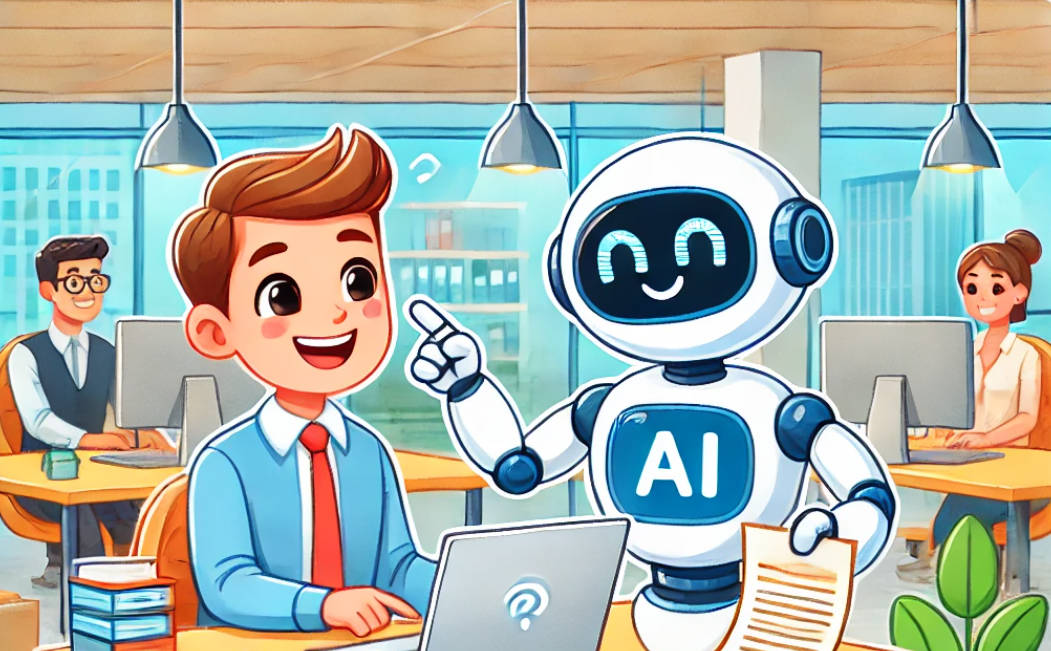
It’s not here to replace technical writers.
It’s here to supercharge them.
Instead of fearing AI, technical writers can use it to work smarter, faster, and more efficiently.
Imagine automating the boring, repetitive tasks while focusing on strategy, clarity, and user experience.
AI is making documentation more scalable, more efficient, and more powerful.
The future isn’t about choosing AI or humans.
It’s about combining both for better results.
AI Is a Tool, Not a Replacement
Every time a new technology comes along, people worry about job losses.
It happened when computers replaced typewriters.
It happened when spell check replaced proofreaders.
Now it’s happening with AI and writing.
But here’s the truth.
AI doesn’t understand context, user needs, or business goals.
It can process data fast, but it doesn’t know what makes content useful.
That’s where human writers are still essential.
Technical writers add clarity, structure, and accuracy that AI alone can’t provide.
How AI Makes Technical Writers Faster and More Effective
AI doesn’t replace technical writers—it makes them more efficient.
Here’s how.
1. AI Automates the Repetitive Work
Writing documentation involves a lot of repetitive tasks.
Writers spend time on:
✅ Formatting documents
✅ Standardising language
✅ Rewriting similar sections
✅ Organising content structure
AI can handle these tasks in seconds, giving writers more time to focus on higher-value work.
Instead of formatting a process guide for hours, AI can clean it up in minutes.
Writers can then focus on refining content for clarity, usability, and accuracy.
2. AI Helps Generate First Drafts Faster
Starting from scratch is often the hardest part of writing.
AI tools can generate a rough first draft in seconds, based on existing content, company templates, or industry best practices.
Writers don’t need to stare at a blank page anymore.
Instead of writing everything manually, they can edit and improve AI-generated content, making it more accurate and reader-friendly.
This means faster documentation, quicker updates, and more efficient workflows.
3. AI Speeds Up Research and Data Processing
Technical writers spend a lot of time researching.
They need to gather:
📌 Product specifications
📌 Compliance regulations
📌 User feedback
📌 Process details from SMEs
AI can scan thousands of pages of information in seconds and highlight the most relevant details.
Instead of manually sorting through reports, writers can use AI to pull key insights and summarise data.
This reduces research time and allows writers to focus on crafting clear, well-structured content.
4. AI Improves Consistency Across Documentation
One of the biggest challenges in documentation is maintaining consistency.
Different teams might use:
❌ Different terminology for the same thing
❌ Inconsistent formatting styles
❌ Conflicting instructions across guides
AI helps standardise:
✅ Language and tone
✅ Formatting and structure
✅ Terminology across documents
This keeps documentation clear, uniform, and professional.
Readers know what to expect, and instructions become easier to follow.
5. AI Supports Translation and Accessibility
AI-powered translation tools make it faster and easier to create multilingual documentation.
Instead of manually translating documents, AI can generate drafts in multiple languages instantly.
Writers can then review and refine translations for accuracy and readability.
This makes content more accessible to global teams and customers, without adding weeks of extra work.
What AI Can’t Do (And Why Writers Are Still Essential)
AI is great for speed and efficiency, but it has limits.
Here’s where human writers are still critical.
1. AI Can’t Understand Users Like a Human Can
Good documentation isn’t just accurate—it’s user-friendly.
AI can generate words, but it doesn’t understand how people learn, what confuses them, or how to simplify complex topics.
Technical writers:
✅ Adapt content for different audiences
✅ Add real-world examples and use cases
✅ Know when to include visuals, tables, and process maps
AI doesn’t think like a human—so human oversight is still necessary.
2. AI Makes Mistakes (And Sometimes Lies)
AI can generate incorrect information without realising it.
If a technical guide has wrong steps, it can lead to:
❌ Misuse of software
❌ Compliance issues
❌ Safety risks
Writers need to fact-check and verify everything AI produces.
AI speeds up content creation, but humans ensure accuracy.
3. AI Lacks Creativity and Critical Thinking
AI can’t think strategically or make judgment calls.
It can suggest content but doesn’t know what’s best for users.
Writers bring:
✅ Clear, logical thinking
✅ Structured storytelling
✅ A user-first approach
Good documentation isn’t just words on a page.
It’s designed for understanding, engagement, and usability—and that’s where humans shine.
The Best Documentation Combines AI and Human Expertise
AI is not a replacement for technical writers.
It’s a powerful tool that makes documentation faster, smarter, and more scalable.
The best results come from combining:
🤖 AI for automation and speed
🧠 Human writers for clarity and accuracy
Businesses that use AI the right way will:
✅ Produce documentation faster
✅ Improve consistency and readability
✅ Keep content accurate and user-friendly
The future of documentation isn’t AI or humans.
It’s AI + humans working together.
The question isn’t if AI should be used.
It’s how to use it effectively.