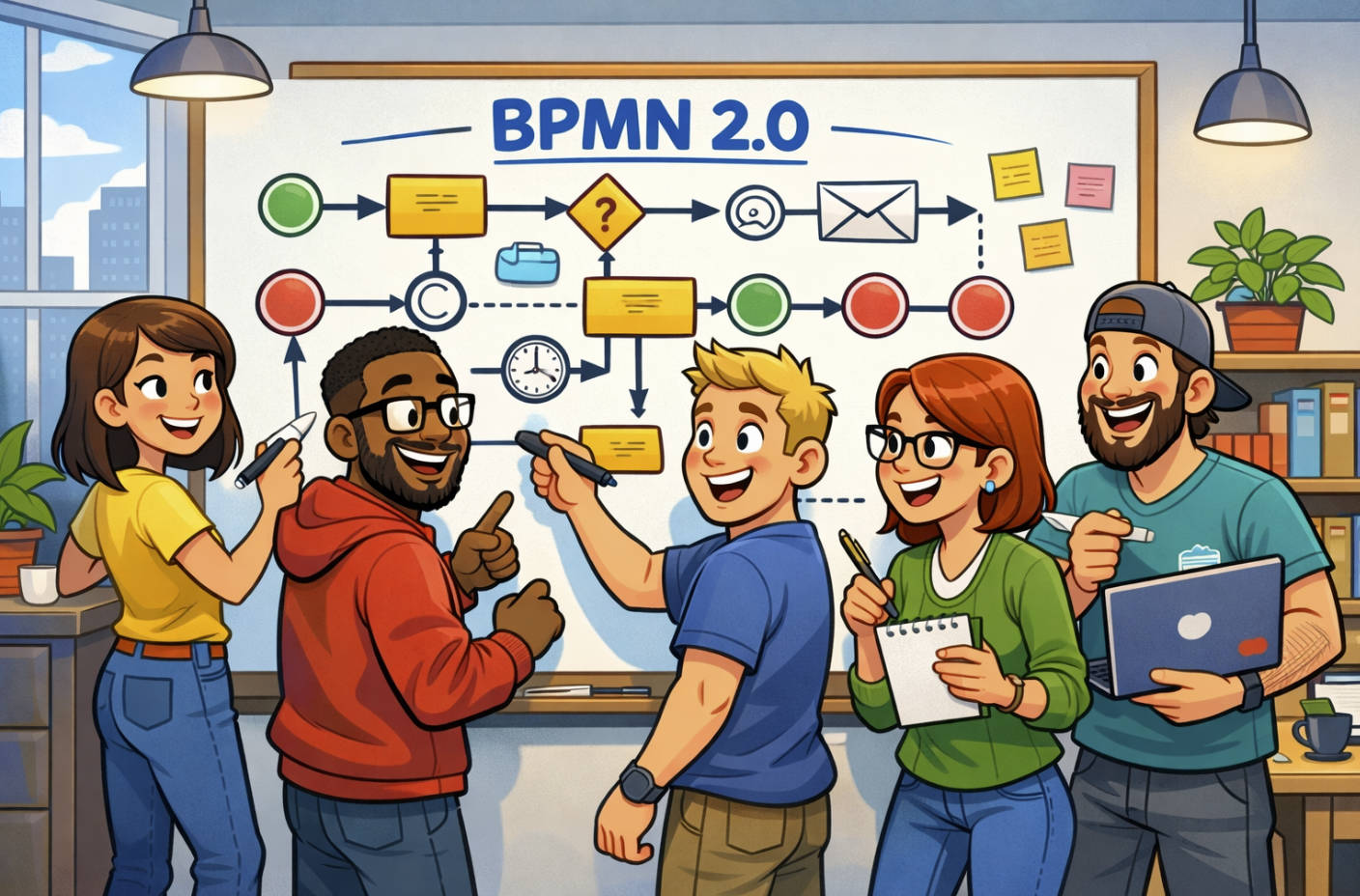

It’s one of the most essential tools in a business analyst’s kit.
Process mapping isn’t just a nice-to-have.
If you’re trying to improve how a business works, you need to understand how it actually works.
That’s where process mapping comes in.
🔎 See the Work Clearly
When teams describe what they do, it often sounds clean and simple.
But once you map it out step-by-step, the real picture emerges.
You’ll spot duplicated steps.
Find gaps.
See where things fall through the cracks.
Without a map, those problems stay hidden.
💬 Bridge the Communication Gap
One of the biggest challenges in business analysis is getting people on the same page.
Process maps are a visual way to align stakeholders.
Everyone—from executives to frontline workers—can see and agree on how work gets done.
This makes conversations faster, clearer, and more productive.
🧱 Build the Foundation for Change
Every improvement starts with a clear view of the current state.
You can’t fix what you don’t understand.
Process mapping helps you document the “as-is” state, which becomes the base for redesign.
Whether it’s automation, digital tools, or new workflows—your “to-be” design starts here.
⚙️ Make Systems Fit the Process
When businesses buy software or build new systems, they often try to force the tool onto the team.
Process mapping helps flip that.
You map the work first—then design systems that support how people actually work.
This reduces rework, increases adoption, and makes your project more successful.
📈 Track Progress and Spot Risks
With a map in hand, it’s easier to measure progress.
You can compare before and after.
You can also spot bottlenecks early—before they turn into major blockers.
And during transformation projects, it’s a key tool for managing scope and expectations.
📌 Final Thoughts
Process mapping is more than lines and shapes.
It’s a way to make business logic visible.
It helps business analysts ask better questions, run smarter workshops, and create change that sticks.
If you’re not using it yet, start small.
Pick one messy process, map it out, and see what you learn.
Chances are, you’ll never run a project without it again.